Stock & fit
OLYMPIC TRAPPre-mounted
Repeatable shoulder and cheek contact.
OLYMPIC SKEETLow-gun ready
Stock shape and vest clearance matter during the mount.
 Shotgun PathwayOpen interactive pathway →
Olympic / ISSF only. American Trap and American Skeet each use their own competition rules.
Olympic Trap and Skeet equipment profiles.
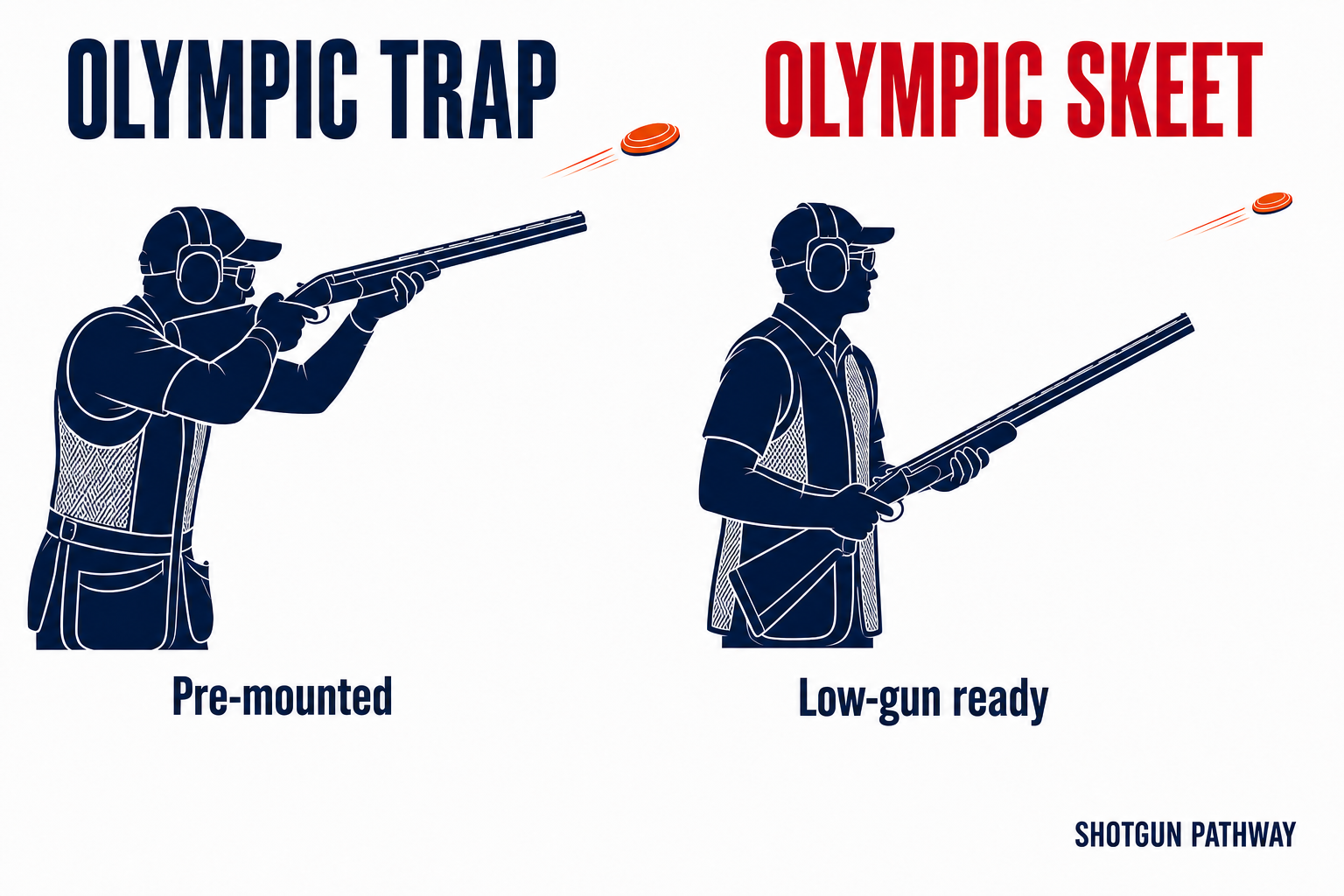
Trap: pre-mounted. Skeet: low-gun ready.
View full sizeRepeatable shoulder and cheek contact.
Stock shape and vest clearance matter during the mount.
Stability is a common design priority.
Mobility is a common design priority.
Rib and comb configurations vary together.
Stock profile supports low-gun mount.
Trap configurations commonly use more constriction.
Cylinder or Skeet configurations are common.
Common design tendencies. Barrel length, barrel-set mass and total mass describe different properties. Match dimensions and balance to the athlete with a qualified fitter.
12 gauge or smaller; smoothbore. Semi-automatic and pump actions are excluded by ISSF rules. Over-and-under is a common permitted design. ISSF equipment rules · 9.4.2
Factory cartridge example.
Factory cartridge example. Skeet cartridges also use No. 9.
Typical shot sizes. Check pellet diameter in millimeters; numbering varies by country and product.
ISSF pellets: spherical, ≤2.6 mm. The +0.5 g tolerance applies to inspection measurements. Ammunition rule · 9.4.3.1
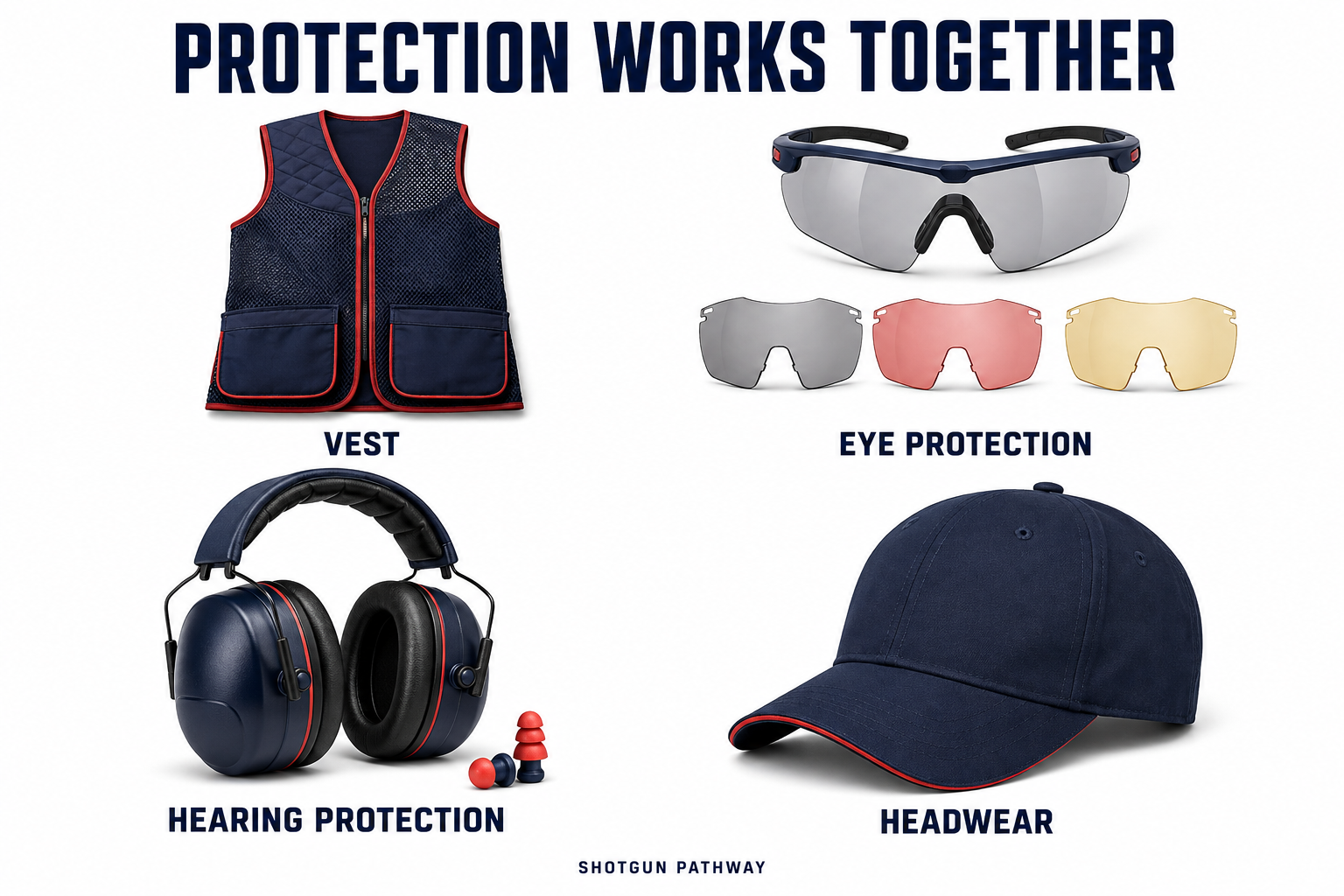
Vest, glasses, hearing protection and headwear—checked together.
View full size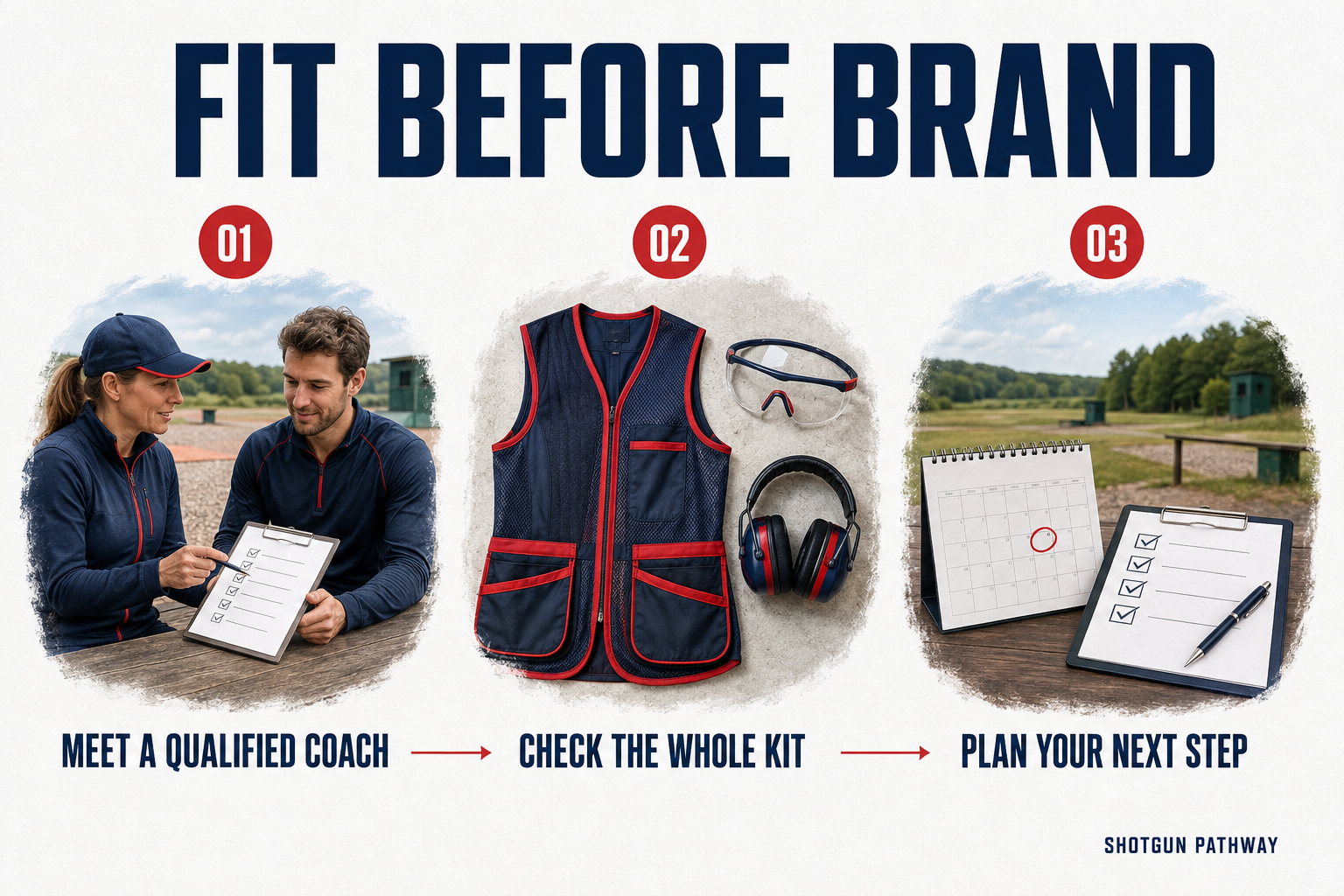
Meet a qualified coach. Check the kit. Plan the next step.
View full sizeISSF Rule Book 2026, Edition 2025, second print 07/2026, effective July 1, 2026. Selected checks only; the full rules, event bulletin and officials control eligibility.
Smoothbore, 12 gauge or smaller; semi-automatic and pump actions excluded. Over-and-under is a common permitted design.
ISSF 9.4.2.1Stock toe on or below the official marker until target appearance. Use a non-stretch vest with fixed fit.
ISSF 9.9.4 / 9.9.4.4Maximum 170 mm: highest cheek-rest point to lowest buttplate-toe point. Use the official inspection diagram.
ISSF 9.4.2.9–10Shot mass: 24.0 g limit, +0.5 g inspection tolerance; sampled average ≤24.5 g. Spherical pellets ≤2.6 mm; transparent/translucent wads. Standard cartridge construction required.
ISSF 9.4.3.1Adequate hearing protection near the firing line; shatterproof eye protection for athletes, referees and officials.
ISSF 9.2.7Plastic side blinders: depth ≤60 mm, front edge ≤30 mm ahead of forehead center. Front blinder: width ≤30 mm.
ISSF 9.12.4Shot charge is the total pellet mass. Inspection tolerance applies to measurement checks. Use compliant factory ammunition.
Ask about supervised introductory or loan equipment before a major commitment. Fitting and safety checks belong with qualified professionals.
Choose lens tint for the athlete’s vision, light and background.